Fractional co-founder for AI builders
An idea is not a product. And a product is not a business.
You have an idea, or something that works when you click it yourself.
I cover the product design, the development, and the operations that turn it into a real business.
what gets fixed
The product
The business
Why not just hire someone
The code was never the whole job.
An outsourced developer
Builds what you ask for, then waits for the next ticket.
A traditional architect
Redraws what you already have, and sends a five-figure invoice for the plan.
Neither stays for the pricing, the billing, or the funding. Those are the parts that decide whether the thing becomes a business, so I cover them.
The gap nobody warns you about
What actually breaks.
It looks like AI made it
Generic components, uneven spacing, layouts that fall apart on a phone. Visitors decide in seconds, and they never write in to tell you why.
The flow has holes
Sign up, hit a blank screen, and no clear next step. Nobody emails to say where they gave up. They just close the tab and do not come back.
Nothing is joined up
Broken links, buttons that do nothing, a WordPress page sitting next to a half-built app. It reads as unfinished, because it is.
You are paying for what you do not use
Cloud credits untouched, a server sitting idle, subscriptions renewing every month for tools nobody opened. Meanwhile the thing still is not ready.
The full map
Nine things stand between a demo and a business.
Some of them are inside the product. Some are around it. Most founders are strong in two or three and guessing at the rest, which is why the whole thing feels stuck.
01 / The product core
Where the building stops
What AI leaves half-finished.
User journey mapping
Clear, conversion-focused paths so customers do not sign up, hit a blank screen, and close the tab.
Monetisation and billing
Stripe lifecycles, subscription webhooks, and billing portals wired so you collect revenue safely.
Infrastructure lockdown
Off per-user low-code tools and onto a flat-rate private server you own, not rent per seat.
02 / The growth engine
Getting it seen
Where most solo founders stall.
Landing page SEO
Metadata, headings, and structure so your product indexes cleanly on Google while you sleep.
Conversion copywriting
Rewriting generic AI text into copy that drives clicks and signups instead of a polite exit.
Automated user loops
Onboarding emails that land in the primary inbox, not spam, and keep customers engaged after day one.
03 / The business engine
The boring essentials
Nobody wants to do these. Everybody needs them.
Capital leverage
Applying to the startup programmes worth your time so you run on credits instead of your own cash.
Corporate setup
A clean company structure and banking that protects you and is ready when investment arrives.
Handoff prep
Documented operations, technical docs, and a stakeholder deck so the business survives a handover.
How I work
I don't start from zero.
I have built the boring parts of software many times over. Databases, auth, billing, deployments, backups. Your product moves onto a foundation I have already run in production, so the first month goes into your customers instead of plumbing.
The product
Clean data, a stable codebase, and a deploy you can trust. Something you are not afraid to open, and neither is your first hire.
The operations
Billing, documentation, support, and the small systems a company actually runs on. Written down, so they keep working without you.
The record
Everything documented as we go. An investor, an auditor, or a new engineer can read the state of the business without a two-hour call.
How it works
Two phases. Plan first, then build.
Phase 1 documents exactly what we are building. Phase 2 builds it. You can stop after either one, and you own everything either way.
The Blueprint
$300 / month
Plan and document the product. 1-2 months of weekly deliverables, before we build.
- Product, growth, and business setup mapped together
- What to use, what to apply for, what order to do it in
- Plain English. No jargon, no sixty-slide deck
- Yours to keep. Act on it with or without me
The Build
$1,000 / month
Weekly shipped work, not reports about work. 1-2 months for most builds.
- Product build, polish, and clean-up
- Customer journey, support, and documentation
- Billing, checkout, and the revenue loop
- SEO, onboarding loops, and automations
- Applications, narrative, deck, and data room
- Async access between sessions
Most founders do not need another freelancer. They need someone who takes the whole thing seriously, who thinks about the business between the tickets, and who is still answering the phone in year three. That matters most when this is a second job alongside a demanding career.
Nothing here traps you. I stay because you want me there, not because leaving is expensive.
Book a 15-minute call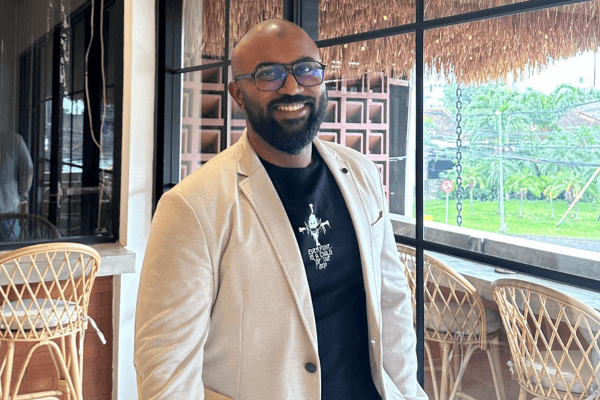
M. SABREEN REZVIE
FOUNDER
Who you are working with
The person actually building it.
I am M. Sabreen Rezvie. Over 17 years I have been the operational glue between clients, product strategy, and engineering teams. I watched good products die in vendor lock-in, opaque invoices, and handover documents nobody could read.
When language models arrived I learned how far they could be pushed. I have spent years building software with prompt infrastructure, deployment templates, and the parts that make AI-generated code survive real traffic. That is what lets me move quickly for you, not what I am selling.
I bring my own network of designers, vendors, and specialists when a job needs one. You are not paying for me to learn who to call.
I run Drifting Desk as a focused solo studio. You work with me, not an account manager. No discovery deck, no junior team, no upsell to a department you did not ask for. I join early and I stay for the long run, from the first customer to the day you sell.
The co-founder framing is deliberate. I carry the product design, the build, and the operations, and I am in the room when the hard calls get made. I simply do not take your equity.
You keep the speed of building with AI. I supply everything around it.
Start here
Two steps, then we talk.
Two quick questions, then pick a slot. I come to the call already knowing what I am looking at, whether you have a working prototype or just the idea.